
Where Should an AED Be Placed? Making Access Easy When Seconds Matter
Where Should an AED Be Placed? Making Access Easy When Seconds Matter

Practical guidance on visibility, accessibility, and placement in everyday spaces
Having an AED on-site is an important step toward preparedness—but where it’s placed can make a critical difference. In an emergency, people shouldn’t have to search for help. AEDs should be easy to spot, easy to reach, and available when every second counts.
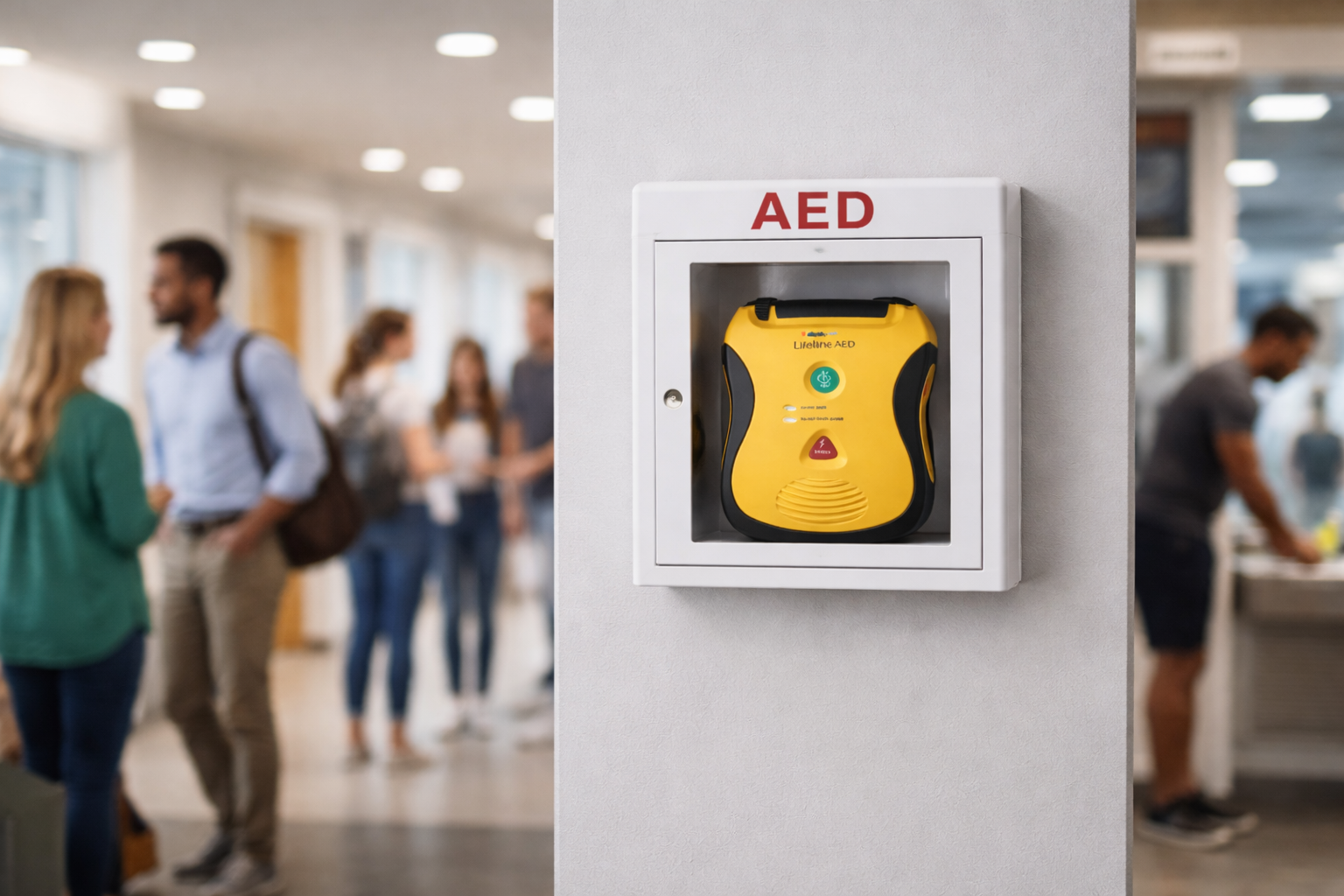
A good rule of thumb is simple: AEDs should be located in areas where people naturally gather and where staff or bystanders can access them quickly. Common locations include building entrances, gyms, break rooms, athletic facilities, and community spaces. Visibility matters just as much as placement, so clear signage and unobstructed access are key.
Accessibility is another important consideration. An AED should never be locked away, blocked by furniture, or placed in a restricted area. During an emergency, hesitation or confusion can cost valuable time. The goal is to make the device available to anyone who needs it, without barriers.
It’s also important to think about coverage. Larger facilities or campuses may require more than one AED to ensure quick access across different areas. Evaluating layout, foot traffic, and response time helps determine the right number and placement of devices.
At Pulse AED, we help organizations take the guesswork out of placement. By evaluating your space and usage, we help ensure your AED is not just present—but positioned to make a real difference when it matters most.
